Positive Reinforcement Horse Training: A Modern Guide to Happier Horses
In recent years, the global equestrian community has seen a significant shift towards training methods that prioritize horse welfare and ethical horsemanship. At the forefront of this movement is positive reinforcement horse training, often referred to as R+ training or clicker training.
This guide will explain the principles of R+ training and provide practical tips for incorporating it into your daily interactions with your horse.
What is Positive Reinforcement (R+)?
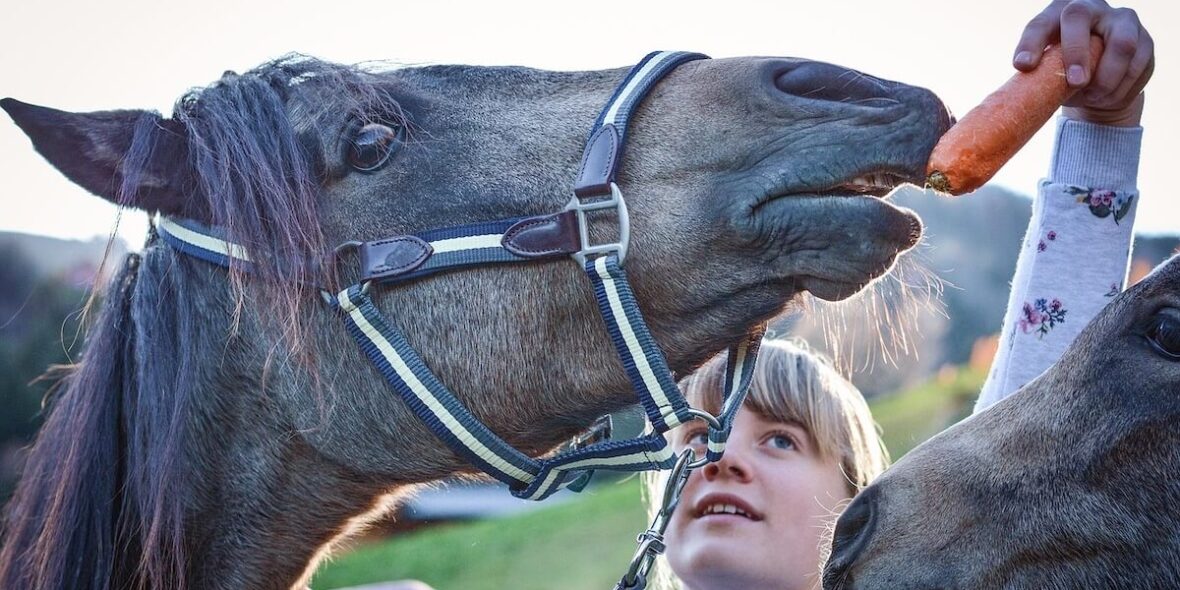
In simple terms, positive reinforcement involves adding something the horse enjoys immediately after they perform a desired action, making that behavior more likely to occur again.
Common rewards (reinforcers) include:
Food treats (carrots, specialized pellets)
Wither scratches or specific types of gentle petting
A "marker" sound, like a clicker or a specific word (e.g., "Good!"), which signals to the horse that a reward is coming.
The key is that the horse must perceive the outcome as rewarding.
Why is R+ a Growing Trend?
Research consistently highlights the benefits of R+ methods: Improved Welfare, Willingness to Engage, Stronger Relationships, and Problem Solving.
Improved Welfare: Horses trained with R+ methods exhibit fewer signs of stress and anxiety compared to those trained with conventional pressure-based methods.
Willingness to Engage: R+ makes training feel like a positive game, encouraging horses to be more motivated, playful, and engaged in sessions.
Stronger Relationships: Studies show that R+ trained horses are more likely to seek out contact and interaction with humans, improving the overall relationship and trust.
Problem Solving: This method encourages horses to think critically and offer behaviors, rather than just avoiding pressure, enhancing their cognitive abilities.
Practical Steps to Start R+ Training
Incorporating positive reinforcement doesn't mean abandoning all other methods. It can be used alongside traditional techniques to improve communication and change the horse's emotional state during training.
1. Choose Your Reward and Marker
Decide what your horse finds highly valuable. Many start with small food treats. Introduce a marker (a clicker is popular for precision) to clearly "mark" the exact moment the horse performs the correct behavior, followed immediately by the treat.
2. Start Small and Simple
Begin with simple, non-threatening behaviors. Teaching a horse to target (touch their nose to an object) is a common starting point. Break down behaviors into small, achievable steps.
3. Focus on Safety and Boundaries
A common concern is that R+ creates "muggy" or pushy horses. This is usually due to poor application, not the method itself.
Teach Good Manners: Train the horse to accept treats gently and to respect your space. Reward standing calmly and politely, not leaning in or nipping.
Address Dangerous Behavior Ethically: While R+ is proactive, safety is paramount. In dangerous situations, traditional safety measures may be necessary, but R+ helps prevent such behaviors from becoming the norm by building positive associations.
4. Transition to Ridden Work
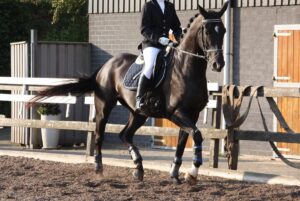
R+ can be used effectively while riding. When your horse achieves the desired frame or movement, a quick click (or verbal marker) and a treat at a halt can reinforce that 'feel' and make the horse want to find that position again.
5. Be Consistent and Patient
The key to success is consistency. Ensure everyone handling the horse understands the method. Training with R+ might feel slower initially as you focus on quality over quantity, but it often leads to faster, more sustainable results in the long run.
Summary: A Partnership Built on Trust
Positive reinforcement offers a powerful, ethical approach to horse training that leverages the science of how horses learn, creating happier horses and stronger bonds.