The Ultimate Guide to International Horse Sales: Buy and Sell with Confidence
Finding your dream horse knows no borders. In today’s digital age, the perfect showjumper might be in Germany, while the ideal dressage prospect is grazing in a field in Sweden or Ireland. However, buying or selling a horse internationally requires more than just a handshake; it requires a strategic approach to logistics, law, and health regulations.
At ForEquestrian, we connect buyers and sellers globally. To help you navigate the process, we’ve compiled this essential guide to international equine trade.
1. Essential Documentation and Passports
Before a horse can cross international borders, its paperwork must be impeccable. A missing document can lead to costly delays at the border or even quarantine issues.
- The Equine Passport: The original passport must always accompany the horse. Ensure all vaccinations (especially Equine Influenza) are up to date and recorded correctly.
- Health Certificates (TRACES): Within the EU, horses typically move under the TRACES system. A government-approved veterinarian must examine the horse shortly before departure to issue a health certificate.
- Export Documents: For trade outside the EU (e.g., to the USA, UK, or UAE), customs declarations and specific blood tests (like Coggins tests) are mandatory.
2. Conducting a Remote Pre-Purchase Exam (PPE)
When you can’t be there in person, the veterinary inspection is your most vital tool. Trust is good, but verification is better.
Hire an Independent Vet
Always hire a veterinarian who is independent of the seller. This ensures an unbiased report on the horse’s health and soundness.
Digital X-Rays and Video Evidence
Request that all X-rays be sent digitally (DICOM format) so your own local vet can review them. Additionally, ask for unedited footage of the horse being caught, saddled, and worked on both soft and hard surfaces.
3. Secure Payments and Currency Exchange
International bank transfers can be tricky due to fluctuating exchange rates and high bank fees. For high-value sport horses, even a 1% shift in currency can mean thousands of dollars.
Pro Tip: Use a dedicated currency exchange service to lock in a rate, and never send a deposit without a legally binding sales contract signed by both parties.
4. Quality Transport: Prioritizing Horse Welfare
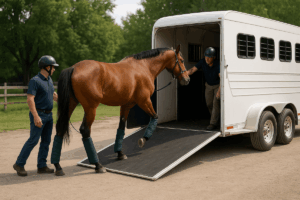
A long-haul journey is physically demanding. Choosing the right transport company is crucial for ensuring the horse arrives in competition-ready condition.
- Professional Equine Shippers: Choose companies that specialize in international routes and offer scheduled rest stops in approved stables.
- Shipping Insurance: Verify that your insurance policy covers “transit risk” from the moment the horse leaves the seller’s yard until it reaches your stable.
5. How to Attract International Buyers (For Sellers)
If you are listing a horse on ForEquestrian.com and want to attract global interest, follow these tips:
- Write in English: English is the universal language of the equestrian trade.
- High-Quality Media: International buyers rely 100% on your photos and videos. Professional media significantly increases your chances of a sale.
- Mention Export Readiness: If the horse already has recent clean X-rays or if you have experience shipping abroad, mention it! It lowers the barrier for the buyer.
Ready to Find Your Next Partner?
Whether you are searching for a Grand Prix prospect in Europe or selling a talented pony to a rider across the ocean, ForEquestrian is your global hub for quality equine classifieds.
Frequently Asked Questions
Q: What documents do I need to export a horse?
A: The most essential documents are the original Equine Passport and a Health Certificate (such as TRACES within the EU). If you are exporting outside the EU, you will also need customs declarations and specific blood tests like the Coggins test.
Q: How do I ensure a horse is healthy if I can’t visit in person?
A: Hire an independent veterinarian in the seller's country for a Pre-Purchase Exam (PPE). Request digital X-rays and unedited video footage of the horse moving on different surfaces to be reviewed by your local vet.
Q: Is it safe to pay for a horse in another country?
A: Yes, but never send payment without a legally binding sales contract signed by both parties. Using a specialized currency exchange service can also help you lock in a fair rate and avoid high bank fees.
Q: How does international horse transport work?
A: Professional equine shipping agencies handle the logistics, including scheduled rest stops and border crossings. Always ensure your horse insurance covers "transit risk" during the entire journey.